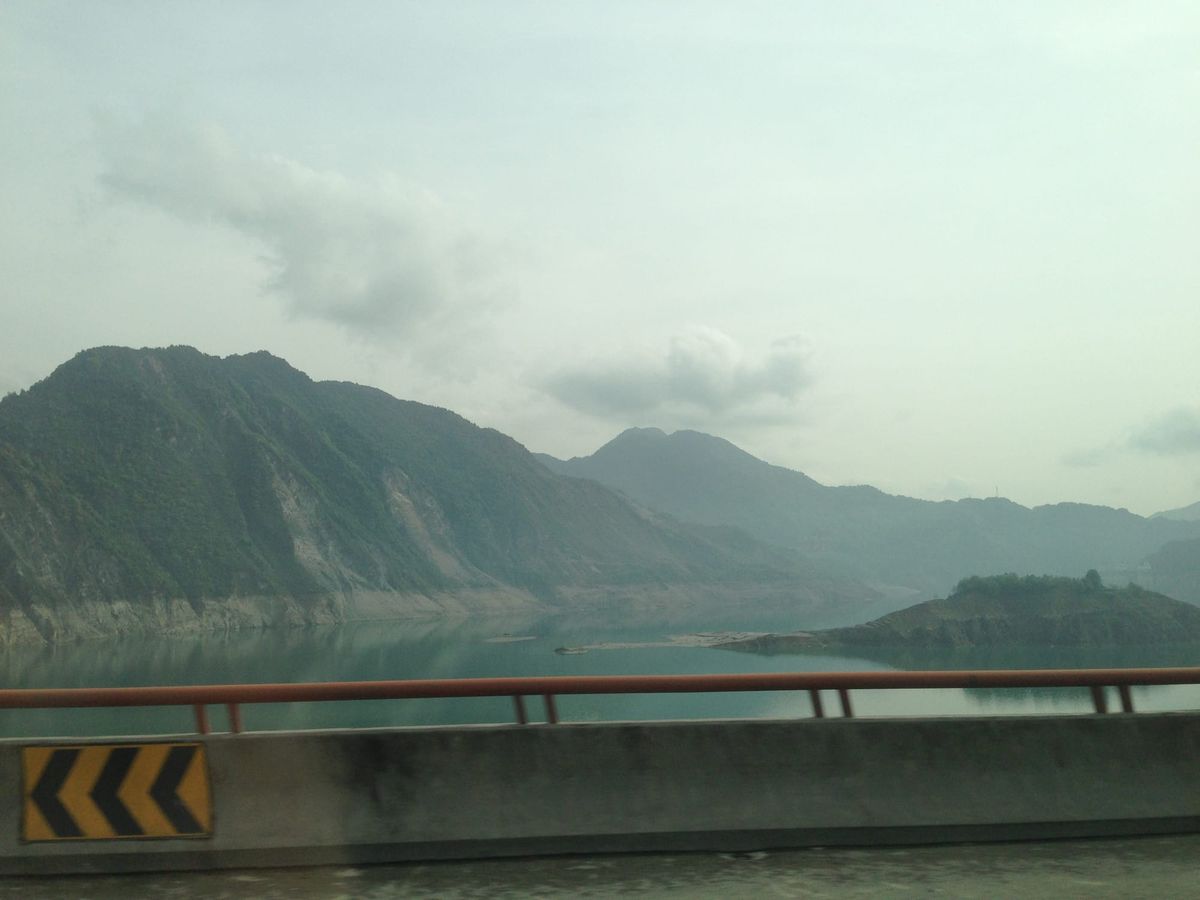
A child in the country smells of crop fields burning. The disappearance of farming family’s backyards that host travellers for home cooked meals shifts the tone of remembrance from 1990s to 2010s in Sichuan, after which comes the pronounced needs to impress the collective mind that include solid highways leading to new airport and territories under development.
A child in the country memorises Chengdu. The view has been replaced, of dimly lit houses far beyond land that was interacted upon for harvest. The drive to the foot of mountains no longer makes visible road side fruit trucks with light bulbs hanging on ropes. The mountains rendered into mere destinations passing through hard shoulders.
What is unnoticeable and at once convenient spells out the ways to alter one’s existing connections to place. Relying on senses, memories reveal houses with burnt logs, of the still gentle and warm lights, of an internal world unfolding in a car seat.
Senses alone are not capable of upholding rationales of absence.
Senses are neither fully equipped with the capacity to be nostalgic, nor does it represent the tendency to be nostalgic. These might be reasons enough to recognise their differences to the isolation of the mind. What can be omitted in depending on senses, is the release points between the interdependence of all things. At times that is a deprived quality for some.
Taking in the warmth and gentleness that decorate the roads in the country, a child’s feeling world lent itself to sensing connections and embedded-ness. The reality presented an impossibility of being accepted, or simply allowed to be.
The freedom felt sitting in the backseat of a car, driven by a carer whose violence was yet to be contended with, how one finds heat warmed by the intensity of hope is a telltale sign of how contemporary stories are also myths to be told.
From here it is not hard to understand, how the land appealed that much more to the senses, and is felt that much more vividly than one’s own reality. It's similar to being in a permanent state of grief, the land did not act as an escape for the lack of agency in a child. It was making them a forever passenger, in a comfortable suspension.
A body seeking validation of comfort knew how to hold onto senses. If the morning was to be hopeful, through the mist that hung low on the ground in the Chengdu basin, a sense of newness was then clung to at its height. The scent of processed materials like soap or incense, reenact entering spaces registered as familiar, and often recalled as a lack in safety.
A child in the country latched onto senses of the land, it gave ground solid enough to not notice the disconnections, the meals had in farmers’ backyards, not nurtured in a genuine curiosity by the visiting family, but suspended in the need for walled feeling worlds.
Some say that’s what constitutes the creative energy of an artist. A self-created fence, made for production. Yet it is based on, in the case of my own experiences, the lack of space for roots to grow. As much as it feels like the bedrock for creativity, it is also the foundation of alienation.
A relationship to land built on alienation only lends itself to be reduced to ecological performativity through indirect interpretations. This is not a difficult place to arrive at.
When the worlds of senses and feelings are manifested in suspension, patterns of memories and loss transform into validations of highs, of dopamine hits on the collective surrender to finding ways to root.
Do artists have moral responsibilities to not create patterns of addictions?
Could one prevent the sense of loss to be expressed alone? Or rather than prevention, could one make space for the release of losing past stories, because something else is being made present?
If to give up making sense of shared time and histories is not an option that can be stomached, than the preconditions that the child latched onto as comfort are to be let go, so that they can be rebuild, through the awareness of attachment, and the openness to hold more than what counts as valid for what the sense and feeling worlds have been tamed to crave, with insatiable appetite.
What is the country, when one gives up on the need to belong in both its tangibility and intangibility, and root from such a knowable foundation?
Not grounded in comfort of losses, or the paint of its allure, when one is not actively reading clues, not attempting to make music, and not taking notes for poetry, there’s a part of self that has loosen the hold.
Not caused by denied access, not stirred by slowness made magic, beyond a direct path walked by one’s desire, there’s a tricky freedom, a slice of air through an open door, a pair of eyes that create visions not to behold.
Not grounded in wounds, nor in efforts to heal, there’s an elevated space from one's abdomen, it does not seek to express, its power is in the readiness. Though such readiness is not a cause for gathering, but revealed as a suitable place to rest the complexities of being in the country.
When expressions no longer need to take precedence, there arises a space between alienated attachments and a forcefully opened palm, and in there lies the shadow of memories that can lift up a smile from a trickster in exile.

Member discussion: